Author: Lucie

  • Press Release: How YachtCloud’s GEST is redefining service onboard.

    Press Release: How YachtCloud’s GEST is redefining service onboard.

    Written by Leona Caanen | Superyacht Times

    In a time where privacy is one of the highest forms of luxury, YachtCloud has refined and luxurised service onboard superyachts. The most popular of their technological products making yacht life easier, is the GEST Service Call System. The call button is the most popular element of the YachtCloud portfolio, which is made up of six products in total: OMNIYON, YIS, CrewBoard, LaundryBoard, ECHO and GEST.

    YachtCloud, based out of Rotterdam, The Netherlands, is a product developer that focuses on delivering premium technology for the world’s most discerning clients. Established in 2014, the company has over a decade of experience in the delivery of their premium tech, and is dedicated to crafting yacht experiences where technology and craftsmanship work together in harmony to enhance comfort, safety and enjoyment at sea.

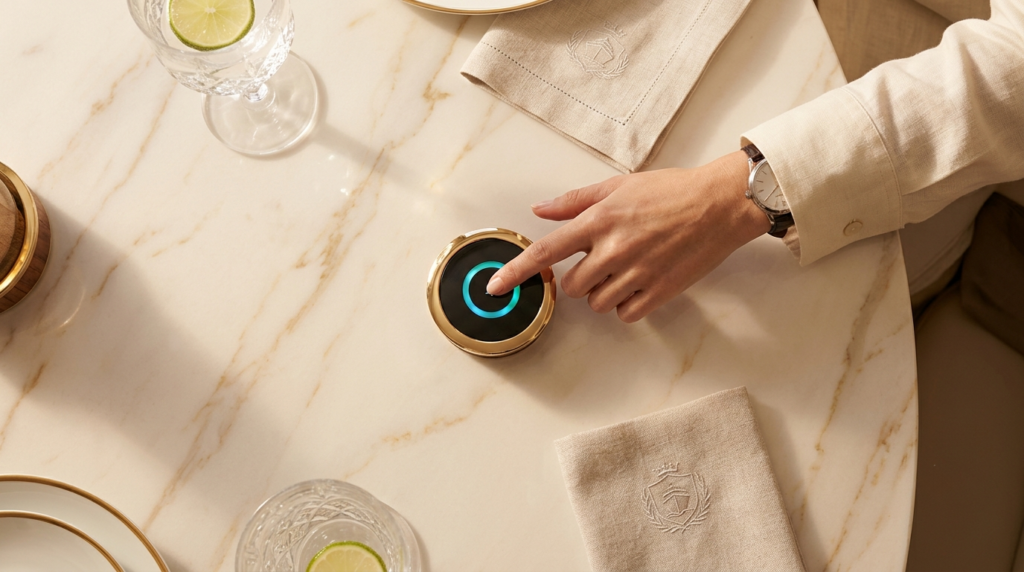
    gest button with finger to call for service on a wooden tray with on a marble table with a vase

    Call system

    The GEST is a service call system: “When owners or guests onboard want service, they can press the button, which sends a notification to the crew,” shares Lucie Hubert, Strategic Marketing Manager at YachtCloud. “Crew members accept the request, which turns the button green, so the guests know someone is handling it.” From there, a crew member will come to inquire about the request. Once completed, the crew marks the open request as completed and the button is once again ready to go.

    The purpose of the GEST button is to ensure privacy, “there is no microphone on the physical button, it’s something we don’t want to include precisely because of privacy. If you press it, someone will actually have to come to you”, Lucie adds. 

    There is also a digital version of the GEST Service System, which works just like the physical button, but here there is a chat function. “You can send the notification, but also chat directly with the crew members and share your request right away.”

    The goal of the button, besides ensuring smooth seven-star service, is precisely that privacy. Instead of standard WhatsApp groups on yachts, the button ensures no personal information other than necessary needs to be shared. “It reduces those big group chats that we often see onboard yachts. With the button you can directly notify the chef or the chief stew or a deckhand – everything can be separated to specific crew”, Lucie points out.  

    assemble of gest buttons transparent background

    Onboard superyachts

    The very first prototype of the GEST Service System was built in 2018. Two years later, YachtCloud had sold their 100th button. “Three years ago, we sold 100 buttons to a single project,” Lucie recalls. From there everything has just grown really fast. 

    How many call buttons each yacht orders, depends mostly on size. “We see two options,” notes Lucie. “The first one is that the yacht just wants it in common areas, such as the lounge or the aft deck. The second is that we see yachts who want a call button in every single room, including all the staterooms.” The type of buttons tends to be a mix between physical and digital “often we see the digital buttons for the staterooms and the physical ones for the common spaces.”

    four gest buttons white, silver, gold and bronze
    three gest buttons on marble table on wooden tray

    Design & craftmanship

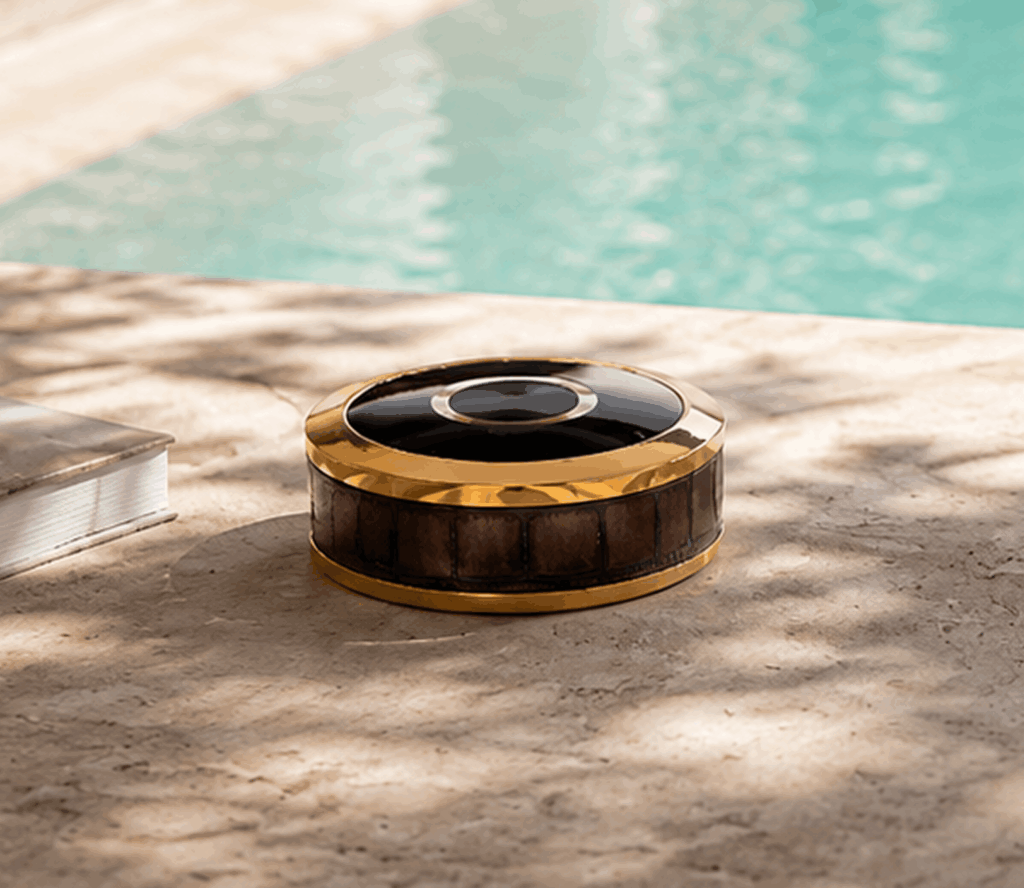
    The button’s physical design is well in line with the luxury service it is designed for. Each button is completely customisable, “you can have a ring engraved, or the yacht’s logo or name, even the material is fully customisable,” Lucie notes. “You can have the ring on the button in 24K gold, stainless steel, dark or light bronze.” Even the leather of the button is customisable: “we had a client who wanted a specific leather. We said, ‘just send it to us and we’ll make it happen’, and we did.”

    YachtCloud prides itself in their flexibility and ability to craft their product to their client’s ideal design. Their service meets the luxury standard as well, “we have a great support team and we keep track of when there are button breakdowns and they need replacing.” The backend of the system is entirely remote, “we can access the system of all of our clients and jump in to fix it when needed, without needing to be physically present.” 

    When the issue cannot be fixed remotely, the button is sent to the warehouse, which sits next to the YachtCloud headquarters in Rotterdam. It is also where the company does their refurbishing “we are working to be more sustainable, and as these buttons are used daily, they can of course obtain damage overtime. We’ve introduced a system where buttons can be sent to the warehouse and the ring, leather, or any other element is fixed, checked, and sent back to the client.”

    Challenges along the way

    No successful product comes without its challenges along the way. “When we started, the battery life was a big challenge” shares Lucie. The button’s battery would last about a day, and would take numerous hours to charge. “Now, a button lasts up to three to five days, depending on usage, and can be fully charged in four hours.” 

    YachtCloud is continuously working to improve the button. “We’ve gone from a battery life of two days to a battery life of five days”; a huge jump in the battery’s longevity. “If the battery life goes under 20 percent, the chief stew will get a notification that it needs charging, so everyone is always in the loop.”

    gest button on teak floor of a yacht with sunglasses and towel
    gest button in yacht cabin

    A happy crew is a happy yacht

    No challenge has been too big for YachtCloud, and they’re continuously working hard to incorporate any and all feedback they get from clients. “We pushed a new colour, white, because one client specifically wanted it,” shares Lucie, “any idea the client has, we’re always open to hear it because we want our product to cater the client to the best of its ability – it’s how we develop our products and our company.”

    The feedback from clients, captains and crew has been invaluable. One captain of a 42-metre motor yacht emphasised how the “GEST system was set up in minutes, is loved by our owners, guests and crew.” The electro-technical officer of another 40-metre motor yacht noted how the GEST system has “been a great addition to our operation. It allows guests to request service, drinks or whatever they need while giving them complete privacy when they don’t want to be disturbed. It creates a smooth, intuitive and professional experience onboard.”

    The goal of products like GEST, and of YachtCloud as a whole, is to create a connected yacht experience – one where technology and craftsmanship work in harmony to enhance comfort, safety and enjoyment at sea.

  • How to deliver 6 star service without increasing crew workload

    How to deliver 6 star service without increasing crew workload

    How to deliver 6-star service without increasing crew workload

    In luxury environments, service expectations keep rising. Guests want instant response, total discretion, and no visible “effort”. But crews and house teams are already stretched.

    So how do you elevate service without adding more people, more radios, or more stress?

    1. Remove friction from guest requests

    The biggest hidden problem isn’t staffing, it’s how guests ask for service. In reality, guests hesitate to call, they don’t want to interrupt or feel demanding. Apps feel impersonal or complicated. For a crew perspective, radios are intrusive and visible.

    The result: delayed service, missed opportunities, and reduced experience.

    6⭐ service starts when asking for service becomes effortless.

    2. Shift from reactive to invisible service

    Traditional service is reactive:

    • Guest calls
    • Crew receives
    • Crew responds

    But high-end service should feel anticipatory, seamless, and almost invisible. The goal is not faster service but a frictionless service flow.

    3. Give crew clarity, not more work

    Adding tools often makes things worse, meaning more notifications, more devices to use, thus more complexity. Crew need clear, prioritised requests, delivered through silent, discreet alerts, with no ambiguity about what is required. At the end, efficiency is not about doing more, it’s about removing confusion.

    4. Design service into the environment

    In true luxury, service is embedded into the space, not added on top. Think of no visible tech clutter, no disruptive sounds, or no learning curve for guests. When done correctly, guests instinctively know how to request service. With GEST, service call button, requesting service is as easy as pressing a button. 

    5. Reduce micro-interruptions

    One of the biggest drains on crew productivity is the accumulation of small interruptions, repeated clarifications, and inefficient communication loops, where tasks bounce back and forth (for example, a guest request requiring follow-up questions), adding workload without adding value, so removing these micro‑frictions is where real efficiency gains are made.

    6. Standardise without losing personalisation

    Luxury service is not about rigid systems or overly structured routines, but consistency remains essential. Every request should be clear and easy to act on, every response predictable in its quality and timing, and the overall standard of service should never depend on who happens to be on shift. The strongest operations achieve this balance by standardising the underlying process, such as removing ambiguity, reducing variability, and guiding execution, while still giving crew the flexibility to personalise interactions and tailor the experience to each guest.

    7. The result: perceived effortlessness

    When this balance is achieved, the result is a powerful sense of perceived effortlessness. Guests feel seamlessly and “magically” taken care of, without seeing the coordination behind the scenes. Crew, in turn, feel more in control of their workload rather than overwhelmed by it, as clarity and structure reduce unnecessary stress. Service becomes not just functional, but distinctive, a signature experience that reflects both precision and care. Crucially, this improvement does not rely on increasing headcount or adding operational complexity; instead, it comes from removing friction, improving clarity, and enabling people to perform at their best.

    Where GEST fits in

    GEST is designed to fill this exact gap, providing a tactile and intuitive way for guests to request service, while enabling discreet, silent communication for crew. Seamlessly integrated into high-end materials and interiors, it feels like a natural part of the environment rather than an added layer of technology. There is no learning curve for guests, no visual disruption to carefully designed spaces, and no additional workload for crew. Instead, it simplifies interactions, removes friction, and elevates service, delivering a smoother, more effortless experience for everyone involved.

  • New GEST Notification Features

    New GEST Notification Features

    More Control, Clarity and Confidence

    In operational environments where timing and awareness are critical, notifications must be clear, reliable and easy to act on. GEST has introduced two new notification features designed to enhance reliability, reduce distractions and improve real‑time awareness across all devices.

    These updates focus on delivering a more refined, intuitive and dependable notification experience, whether alerts appear on your watch, phone or system interface.

    Feature 1: A New GEST Watch App with Continuous Notifications

    The new GEST Watch App is fully independent and connects directly to the GEST server. This removes the need for mirrored phone notifications and eliminates duplicate alerts.

    Every notification is delivered once, accurately and without unnecessary noise.

    What’s new

    • Direct server‑based push notifications
    • No duplicate or mirrored alerts
    • Works independently from the phone app

    To further improve reliability, continuous notifications are now available. Alerts can be repeated at configurable intervals until acknowledged.

    Benefits

    • Greater visibility of critical alerts
    • Reduced risk of missed calls
    • Consistent experience across all devices

    This update ensures that important information reaches the right people at the right moment, even in demanding environments.

    Apple Watch with gest service call button notification

    Feature 2: Custom Notification Sounds for Instant Recognition

    GEST now supports custom notification sounds, allowing alerts to be identified instantly by sound.

    Users can define specific notification tones based on:

    • Location
    • Call type
    • Crew member

    This makes it possible to recognise the origin and urgency of a call without checking a screen.

    Benefits

    • Faster response times
    • Less distraction during busy shifts
    • A more personal and intuitive alert system

    It is a subtle enhancement that significantly improves focus, awareness and efficiency.

    gest manager portal for sound notification

    Designed for Reliable, Real-Time Communication

    These new features strengthen GEST’s role as a dependable real‑time notification system. By combining reliable delivery with intelligent personalisation, teams gain greater control over how and when information is received.

    The result is a calmer, more confident workflow,  supported by technology that works effortlessly in the background.

    Update your GEST Apps Today

    To take advantage of the new Watch App, continuous notifications and custom sounds, ensure your GEST apps are updated and review your notification settings. For configuration support or guidance, the GEST team is ready to assist.

  • Press Release: Yacht Infotainment System (YIS) Now Available on Apple TV

    Press Release: Yacht Infotainment System (YIS) Now Available on Apple TV

    Rotterdam, 23/04/2026 

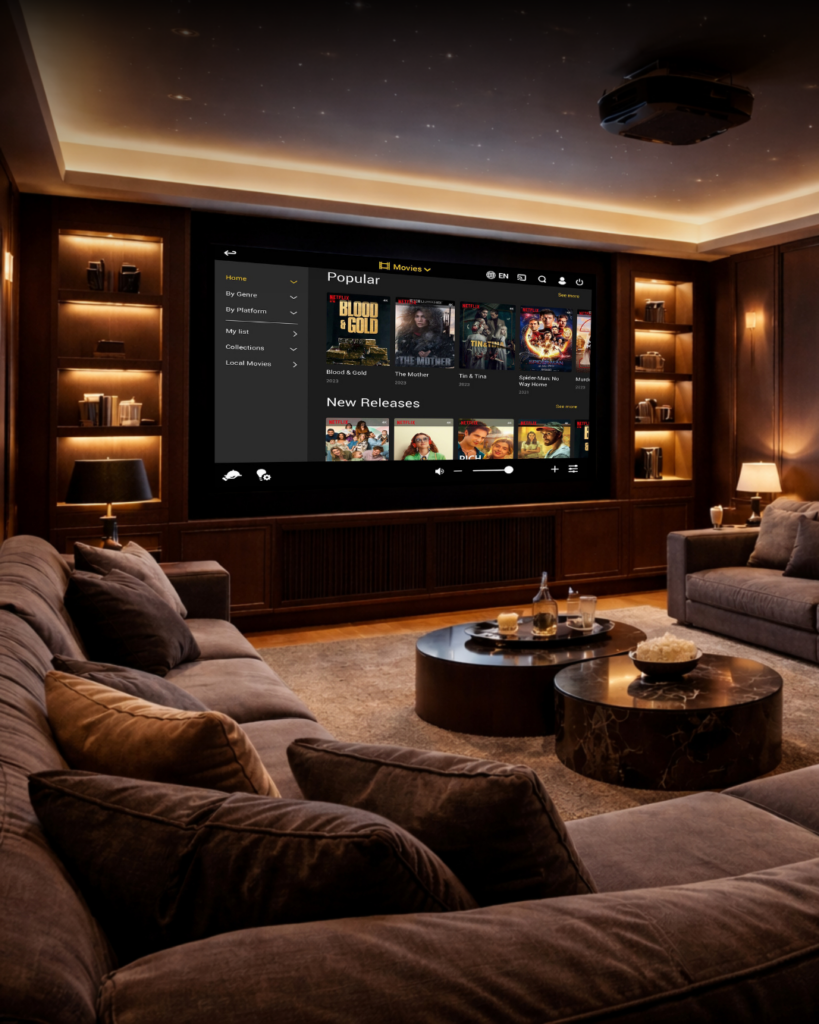
    Yacht Infotainment System (YIS) is now available on Apple TV, offering yacht owners a new, simple way to experience onboard information, visuals, and itineraries through a familiar and easy‑to‑use platform.

    The new YIS Apple TV app, available to download directly from the Apple App Store, introduces a visual and interactive presentation layer while keeping the existing YIS backend unchanged. Nothing breaks, nothing becomes more complex, it simply adds an extra, engaging way to experience YIS.

    A New Visual Experience, Built on a Proven System

    YIS on Apple TV acts as a presentation layer on top of the existing YIS backend. The core system remains exactly the same, ensuring reliability and stability.

    Key highlights include:

    • Customisable slideshow presentations
      • Fully configurable slides
      • Yacht‑specific content
      • Owners or crew can choose which pages to display
      • Slide display time is adjustable through the YIS manager
    • Interactive mode
      • Explore the yacht’s itinerary on an interactive world map
      • See current position and destination
      • Move freely around the map

    Simple by Design

    The guiding idea behind YIS Apple TV is simplicity.

    • Easy onboard enrolment
    • Faster and simpler deployment
    • No additional system complexity
    • Nothing critical can be broken

    For new YIS customers, the Apple TV solution can run on a virtual server, making it possible to deploy quickly and expand later to the full YIS ecosystem.

    For existing YIS users, the Apple TV app is a seamless addition that works directly with the current YIS backend.

    An Extra Experience for Owners

    The Apple TV app is not designed to replace existing systems, but to enhance the owner experience.

    It offers:

    • A visually rich way to explore the yacht
    • An engaging tool to review itineraries and destinations
    • An “extra cool” feature for owners to interact with during downtime

    There is no new pricing model associated with the Apple TV feature.

    Availability

    • YIS Apple TV app: Available now via the Apple App Store
    • Backend requirement: YIS backend required
    • Pricing: Included as a new feature

  • How superyachts manage crew safety, muster lists and onboard accountability

    How superyachts manage crew safety, muster lists and onboard accountability

    Managing crew safety and onboard accountability on a superyacht is a continuous operational challenge. With crew, guests and visitors moving on and off the vessel daily, captains must maintain a clear, accurate picture of who is onboard at all times.

    In an emergency, this clarity can make the difference between a controlled response and confusion. That is why muster lists, real‑time crew tracking and onboard accountability systems are a critical part of modern superyacht safety management.

    Why onboard accountability is critical on superyachts?

    Superyachts operate in a high‑risk environment where emergencies can escalate quickly. Fire, flooding, collision or a man overboard incident leave little time to establish who is missing or still onboard.

    International maritime regulations already require vessels to maintain an up‑to‑date muster list and clearly defined emergency roles for every person onboard. These requirements apply before departure and whenever crew or onboard personnel change. 

    On superyachts, where crew movement and guest activity are constant, especially during yard period, maintaining compliance using manual methods alone can be difficult.

    The main safety challenges superyachts face

    Constant crew and visitor movement

    Superyacht crew frequently go ashore for leave, provisioning or operational duties. At the same time, yachts host:

    • Charter guests
    • Contractors and technicians
    • Day workers
    • Port and inspection officials

    Relying on paper lists or memory to track this movement introduces unnecessary risk.

    Limited visibility during emergencies

    During emergencies, outdated information slows decision‑making. Captains and officers need immediate answers to questions such as:

    • Who is unaccounted for?
    • Was the person meant to be onboard?
    • Are guests involved?

    Maritime safety regulations stress that emergency response relies on clear assignment of roles and rapid coordination.

    Human error under pressure

    Manual sign‑in systems depend on crew remembering to update their status. During busy operations or stressful situations, this fails too often.

    How muster lists are traditionally managed onboard

    Paper muster lists

    Paper muster lists remain widely used and are still legally valid when correctly maintained. They must be updated before sailing and whenever crew changes occur. 

    However, paper lists:

    • Are static
    • Become outdated quickly
    • Offer no real‑time visibility

    Basic digital lists

    Some yachts use spreadsheets or simple digital tools to manage crew lists. While easier to update, they still rely on manual input and offer limited support during real emergencies.

    The shift towards real‑time onboard accountability systems

    To improve safety and reduce risk, many superyachts are now adopting real‑time digital safety systems designed specifically for maritime environments.

    Live digital muster lists

    A live digital muster list gives the bridge an immediate overview of:

    • Crew onboard
    • Crew ashore
    • Guests and visitors onboard

    This approach aligns far more closely with the intent of SOLAS regulations, which focus on preparedness and clarity during emergencies. 

    GPS‑based onboard detection

    Modern superyacht safety software can automatically detect when crew leave or return to the vessel using GPS. This removes reliance on manual sign‑in and significantly reduces human error.

    Underway mode and departure checks

    Before departure, knowing whether all essential crew are onboard is critical. Digital systems that support underway mode help prevent:

    • Accidental departures with crew ashore
    • Confusion during last‑minute movements
    • Delays caused by uncertainty

    Managing man overboard and emergency scenarios

    In a man overboard situation, response time is critical. Digital accountability allows crews to:

    • Instantly identify who is missing
    • Avoid confusion in multi‑crew environments
    • Respond faster during the first critical minutes

    Clear muster information also supports drills, compliance inspections and genuine emergencies, reinforcing good safety culture onboard. 

    Managing guests and visitors onboard

    Crew are trained in emergency procedures. Guests and visitors usually are not.

    Tracking everyone onboard improves:

    • Guest safety
    • Emergency evacuation planning
    • Muster drill accuracy

    A system that includes crew, guests and visitors in one interface reduces blind spots and improves overall situational awareness.

    Why generic software is not enough for superyachts

    Generic HR or attendance software does not reflect the realities of life onboard a yacht. Captains increasingly look for yacht‑specific crew management and safety systems that support:

    • Maritime safety requirements
    • Port‑to‑port operations
    • Minimal administrative burden

    Expected features now include:

    • Live digital muster lists
    • GPS‑based onboard status
    • Man overboard support
    • Underway awareness
    • Simple, crew‑friendly interfaces

    How CrewBoard supports superyacht safety and accountability

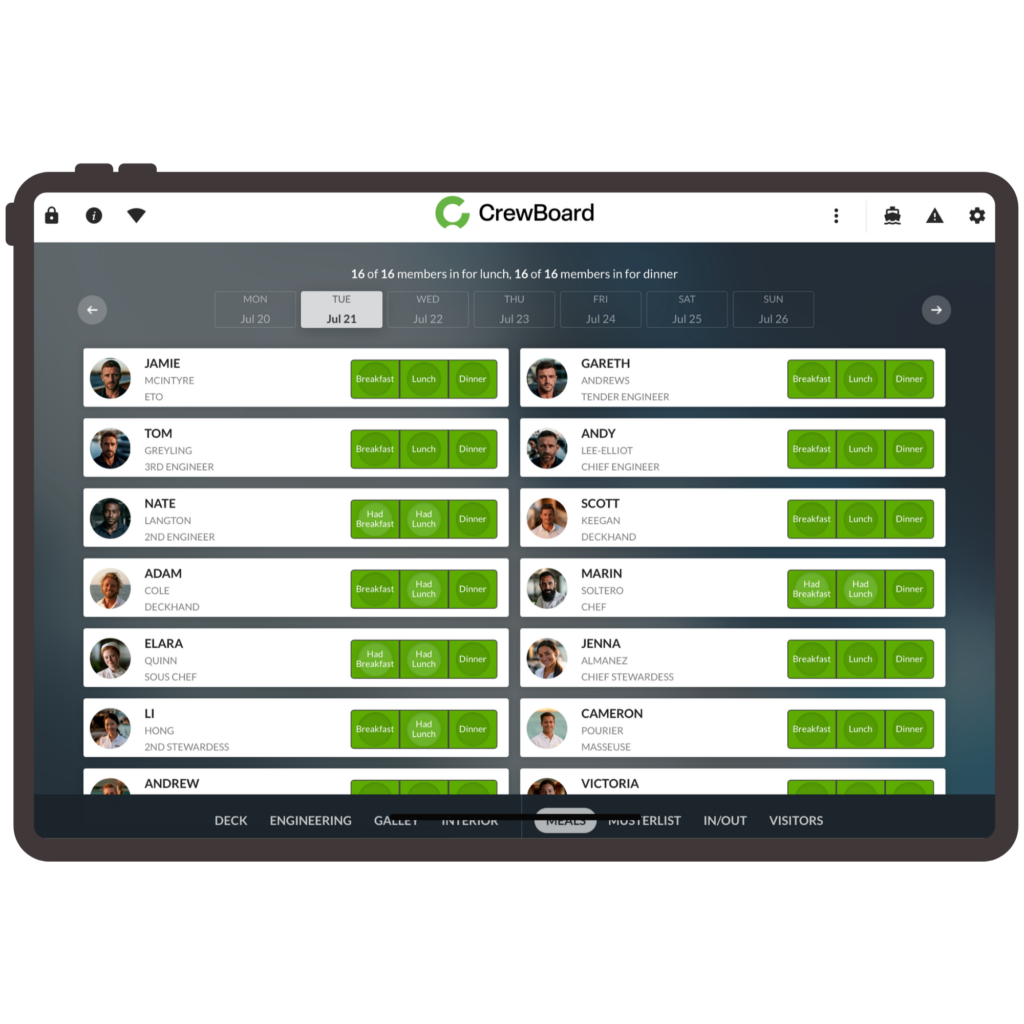
    CrewBoard is purpose‑built for yachting and superyachts, focusing on real‑time accountability and safety awareness.

    It enables yachts to:

    • Maintain a live digital muster list
    • Automatically update onboard status via GPS
    • Manage crew, guests and visitors in one platform
    • Improve safety without increasing workload

    By reducing dependency on manual processes, CrewBoard supports captains and officers during both routine operations and emergency situations.

    Accountability as a modern safety standard

    On today’s superyachts, accurate onboard accountability is no longer just a compliance exercise. It is becoming a safety standard.

    While paper systems still meet minimum requirements, digital solutions offer:

    • Greater accuracy
    • Faster response
    • Reduced human error

    For captains, yacht managers and owners, knowing exactly who is onboard at all times is one of the simplest ways to improve safety—and one of the most important.