

In luxury environments, service expectations keep rising. Guests want instant response, total discretion, and no visible “effort”. But crews and house teams are already stretched.
So how do you elevate service without adding more people, more radios, or more stress?
1. Remove friction from guest requests
The biggest hidden problem isn’t staffing, it’s how guests ask for service. In reality, guests hesitate to call, they don’t want to interrupt or feel demanding. Apps feel impersonal or complicated. For a crew perspective, radios are intrusive and visible.
The result: delayed service, missed opportunities, and reduced experience.
6⭐ service starts when asking for service becomes effortless.
2. Shift from reactive to invisible service
Traditional service is reactive:
- Guest calls
- Crew receives
- Crew responds
But high-end service should feel anticipatory, seamless, and almost invisible. The goal is not faster service but a frictionless service flow.
3. Give crew clarity, not more work
Adding tools often makes things worse, meaning more notifications, more devices to use, thus more complexity. Crew need clear, prioritised requests, delivered through silent, discreet alerts, with no ambiguity about what is required. At the end, efficiency is not about doing more, it’s about removing confusion.
4. Design service into the environment
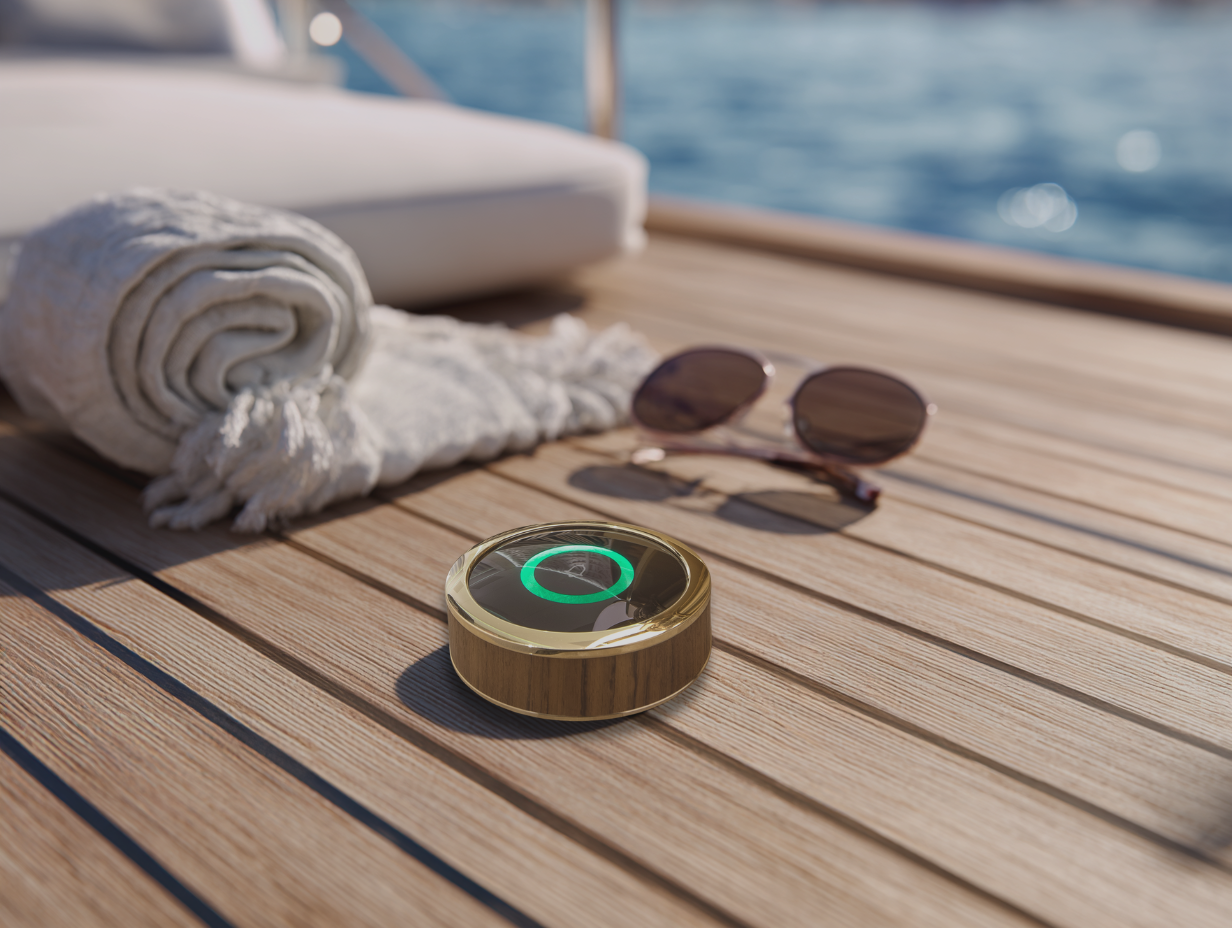
In true luxury, service is embedded into the space, not added on top. Think of no visible tech clutter, no disruptive sounds, or no learning curve for guests. When done correctly, guests instinctively know how to request service. With GEST, service call button, requesting service is as easy as pressing a button.
5. Reduce micro-interruptions
One of the biggest drains on crew productivity is the accumulation of small interruptions, repeated clarifications, and inefficient communication loops, where tasks bounce back and forth (for example, a guest request requiring follow-up questions), adding workload without adding value, so removing these micro‑frictions is where real efficiency gains are made.
6. Standardise without losing personalisation
Luxury service is not about rigid systems or overly structured routines, but consistency remains essential. Every request should be clear and easy to act on, every response predictable in its quality and timing, and the overall standard of service should never depend on who happens to be on shift. The strongest operations achieve this balance by standardising the underlying process, such as removing ambiguity, reducing variability, and guiding execution, while still giving crew the flexibility to personalise interactions and tailor the experience to each guest.
7. The result: perceived effortlessness
When this balance is achieved, the result is a powerful sense of perceived effortlessness. Guests feel seamlessly and “magically” taken care of, without seeing the coordination behind the scenes. Crew, in turn, feel more in control of their workload rather than overwhelmed by it, as clarity and structure reduce unnecessary stress. Service becomes not just functional, but distinctive, a signature experience that reflects both precision and care. Crucially, this improvement does not rely on increasing headcount or adding operational complexity; instead, it comes from removing friction, improving clarity, and enabling people to perform at their best.
Where GEST fits in
GEST is designed to fill this exact gap, providing a tactile and intuitive way for guests to request service, while enabling discreet, silent communication for crew. Seamlessly integrated into high-end materials and interiors, it feels like a natural part of the environment rather than an added layer of technology. There is no learning curve for guests, no visual disruption to carefully designed spaces, and no additional workload for crew. Instead, it simplifies interactions, removes friction, and elevates service, delivering a smoother, more effortless experience for everyone involved.